%20(200%20x%20194%20px)_edited.jpg)
How to Display Artwork at Home: 6 Interior Designer Secrets for Maximum Impact

Artwork is the jewellery of the home. It brings personality, warmth, colour and character into a space in a way that nothing else can. Whether you collect original artwork, love contemporary abstract art, have treasured family photographs or want to display your children's masterpieces, the way you hang and style your art can completely transform a room.
As an artist and interior designer, I've seen some incredible artworks lose their impact simply because they weren't displayed well. Here are six simple ways to make your wall art look amazing and create a home that feels beautifully considered.
1. Hang Low for Maximum Impact
The biggest mistake I see people make is hanging artwork too high.
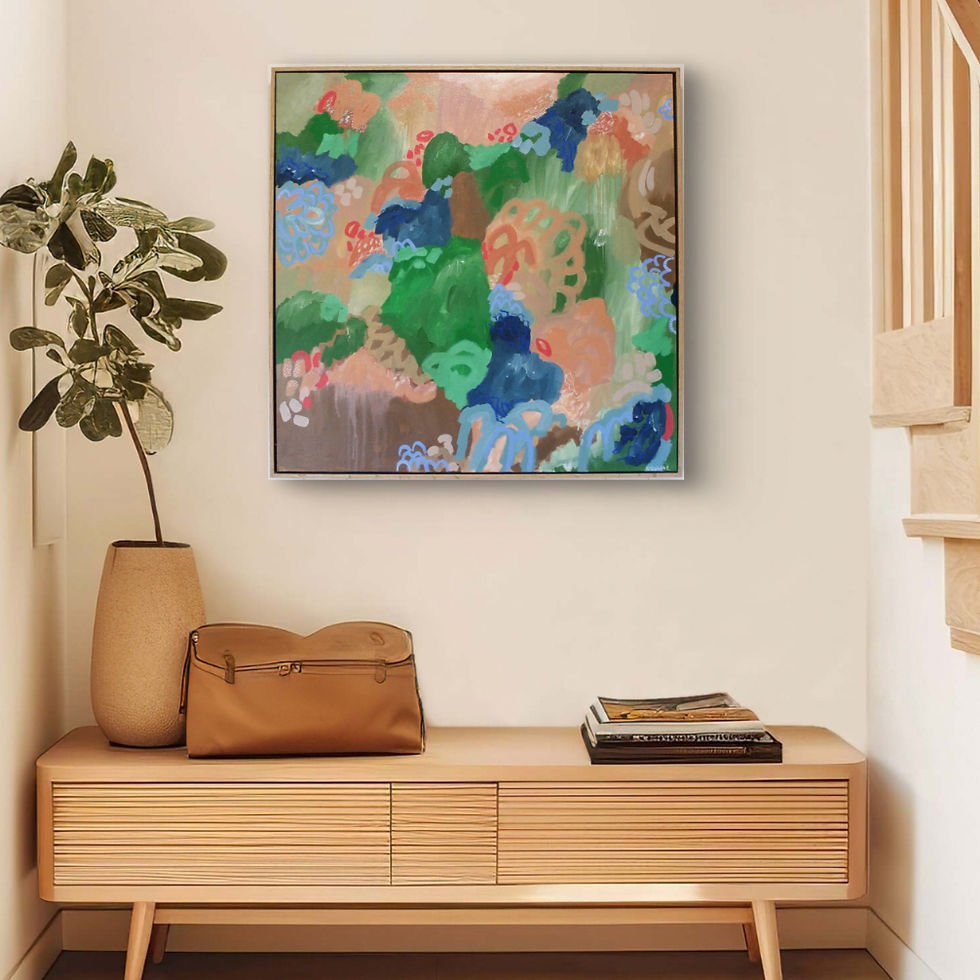
Artwork should feel connected to the furniture around it rather than floating somewhere near the ceiling. As a general guide, leave around 20 centimetres between the bottom of the frame and the top of a sofa, console, buffet or bedhead.
When artwork sits lower, it feels grounded and becomes part of the room rather than an afterthought. This is especially important with large statement artwork and original paintings.
Smaller pieces often look more balanced when grouped together rather than hung individually.

2. Think Bigger Than You Think You Need
When it comes to artwork, scale matters.
Many people choose artwork that is simply too small for the wall. A large piece of original art can completely transform a room and create a focal point that immediately draws the eye.
Some galleries allow you to take artwork home on approval so you can test the scale, colours and composition in your space before making a decision.
One of my favourite interior design tricks is using a large abstract artwork in a relatively small room. It creates drama, confidence and a sense of luxury.
A helpful styling tip is to leave some surrounding walls empty. Giving a statement piece room to breathe allows it to become the star of the show.

3. Create an Interesting Collection
Not every piece of art in your home needs to match.
In fact, the most interesting collections often combine different styles and mediums. Photography, original paintings, drawings, mixed media, vintage finds and framed textiles can work beautifully together.
A gallery wall creates visual interest and tells a more personal story than a room filled with perfectly matched pieces.
To create a cohesive look, consider:
Using a similar colour palette
Choosing frames with a common style
Repeating shapes or textures throughout the collection
Before hanging anything, lay all the pieces on the floor and experiment with different arrangements. Start with your largest artwork and build outwards until the grouping feels balanced.
Once you're happy with the layout, maintain consistent spacing between each frame.

4. Refresh Your Framing
Sometimes it isn't the artwork that feels dated. It's the frame.
Professional picture framing can completely transform an existing artwork and give it a fresh contemporary feel.
I often recommend updating older frames with natural oak, timber or simple contemporary profiles. The difference can be remarkable.
Framing technology has also improved dramatically in recent years. Museum quality glass offers exceptional clarity and significantly reduces reflections, making colours appear richer and details easier to appreciate.
If you have artwork or photographs you love but haven't displayed in years, a new frame could be all they need to shine again.
5. Look Beyond Traditional Wall Art
Artwork doesn't always have to be a painting.
Some of the most memorable interiors feature unexpected pieces displayed as art.
A beautiful Moroccan rug, antique textile, tapestry, collection of ceramics or handcrafted timber panels can become a striking focal point on a wall.
These pieces often add texture and depth while creating a more layered and collected look.
I particularly love placing unexpected artwork in spaces such as kitchens, laundries and powder rooms. An antique painting in a modern laundry instantly creates character and charm.
The key is to ensure the piece is proportionate to the wall and complements the overall style of the room.

6. Take Art Off the Wall
Not every artwork needs a hook.
Leaning artwork against a wall on a console, sideboard, bookshelf or hallway table can create a relaxed and sophisticated look.
Interior designers often use this technique when creating a vignette. A vignette is simply a carefully arranged collection of objects that work together visually.
An artwork positioned behind books, ceramics, plants or decorative objects adds height, depth and interest to the arrangement.
For extra balance, place a lamp or tall plant beside the artwork. This creates a pleasing composition and helps draw attention to the piece.
Final Thoughts
The right artwork can completely change how a room feels. It can add personality, create conversation, introduce colour and make a home feel uniquely yours.
Whether you're displaying original abstract art, family photographs or a collection gathered over many years, thoughtful artwork placement can make all the difference.
If hanging artwork feels overwhelming, professional art installers can help. They understand scale, alignment and proportion, and can safely secure valuable artworks while ensuring everything feels balanced within the room.
After all, great art deserves to be seen at its very best.
By the way, did you know that if local to Brisbane I can bring my originals around to have a look insitu?


Comments